On January 4, 2026, the forum “Targeted Global Communication in the Digital and AI Era”, part of Tongji University's Interdisciplinary Innovation Day, was held at the Siping Road Campus. LI Xiangning, Vice President of Tongji University, attended the opening ceremony and delivered the keynote address.
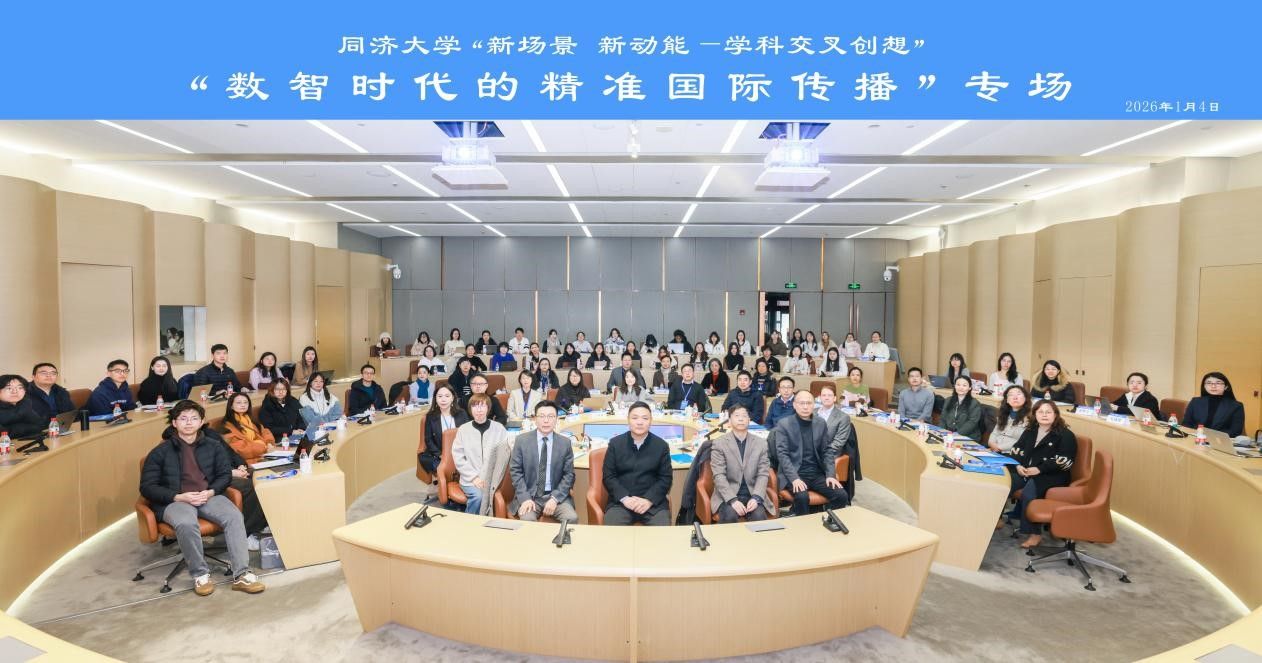
The forum was co-organized by the School of Foreign Studies, Tongji University, and the Research Center for Chinese Discourse and Global Communication, with support from the School of Computer Science and Technology, College of Design and Innovation, College of Arts and Media, School of Political Science and International Relations, and the International School. Scholars and professionals from academia, industry, and the media convened for in-depth discussions on emerging scenarios, driving forces, and pathways for international communication enabled by digital and intelligent technologies, collectively exploring innovative models of targeted international communication within an interdisciplinary framework.
In his address, LI Xiangning noted that, amid accelerating global transformations and a technological wave that is profoundly reshaping the global communication landscape, digitalization and artificial intelligence are reconfiguring the concepts, modalities, and pathways of international communication. Upholding its longstanding commitment to interdisciplinary integration, Tongji University has built cross-disciplinary platforms for dialogue and collaboration, advancing the development of a knowledge system for targeted international communication with Chinese characteristics in support of national strategic priorities. He expressed the University's hope of bringing together broader intellectual resources and collective strength to enhance China's effectiveness in international communication.
During the keynote session, experts shared insights on core themes such as digital–intelligent empowerment and targeted communication, drawing on their respective research agendas and practical experience. XU Qinduo, host of CGTN's Dialogue program under China Media Group, observed that in the digital–intelligent era, international communication is shifting from broad coverage to precision and targeted engagement. He emphasized that targeted global communication requires coordinated efforts across audience targeting, agenda setting, and modes of expression, and that digital and intelligent technologies should be understood as tools rather than substitutes for value judgment. LI Rong, Executive Deputy Director of the International Communication Center of Shanghai United Media Group, outlined the Group's efforts to enhance the effectiveness of its international communication by building an integrated international communication matrix, developing distinctive content IPs, and producing high-quality content, while leveraging AI platforms to empower talent development and collaborative content creation. WU Xuemei, Head of Overseas Reading Products at China Literature Group, drew on the global expansion of Chinese online literature to share insights into the application of artificial intelligence in translation, promotion, and adaptation to overseas markets. She highlighted how intelligent translation and recommendation technologies have enabled the large-scale dissemination and targeted positioning of Chinese web literature in international markets. David Merkle, Chief Representative of the Shanghai Office of the Konrad Adenauer Foundation, analyzed differences in modes of thinking between China and Germany from the perspective of bilateral economic and trade relations and strategic interaction. He emphasized that knowledge-exchange platforms grounded in discussion and dialogue play an important role in reducing misunderstandings and fostering mutual trust. YU Nana, a vehicle-network (connected vehicle) cybersecurity expert from the Intelligent Business Division of CATARC Automotive Technology (Shanghai) Co., Ltd., introduced the automotive industry's compliance explorations regarding cross-border data flows, and offered an assessment of the development of the digital economy and the trend of Chinese automobiles going global. CAI Min, National Managing Partner for Forensic and Compliance at Lixin Certified Public Accountants, shared insights into the application prospects of AI in areas such as contract verification and fraud detection, and emphasized the importance of international standards coordination for building trust mechanisms in international communication.
ZHENG Chunrong, Party Secretary of the School of Foreign Studies at Tongji University and Director of the German Studies Center, pointed out that area and country studies are highly interconnected with international communication, and that the depth and breadth of such research directly affect the targeting and effectiveness of international communication, serving as an essential cognitive foundation for achieving precision communication. CAO Nan, Vice Dean of the College of Design and Innovation, stated that by integrating design thinking with digital media technologies, and by combining cognitive psychology with artificial intelligence research, it is possible to enhance the level of information visualization and emotional expression, thereby strengthening the comprehensibility and emotional impact of international communication. ZHONG Zhenming, Vice Dean of the School of Politics and International Relations, believes that digital and intelligent technologies are driving the diversification of communication actors and the intelligentization of communication processes, thereby prompting international political communication to evolve from a one-way “center–periphery” model toward a multi-center, multi-node configuration. WANG Xin, Director of the Department of Communication in the School of Arts and Media, analyzed the practical challenges of digital–intelligent empowerment from perspectives such as intelligent content production and precision targeting. She noted that precise reach does not necessarily lead to emotional resonance, and proposed the development of a people-centered hybrid evaluation model to enhance the overall effectiveness of international communication. HU Liang, Professor at the School of Computer Science and Technology, focused on issues of content security and value alignment, and proposed a new paradigm of “generative recommendation” centered on multimodal large-scale generative AI models, in which value alignment is achieved through dynamic generation and security filtering. CHEN Chen, Associate Professor at the International School, introduced the school's efforts in building academic periodicals by adopting a problem-oriented approach, promoting interdisciplinary integration, and leveraging AI to precisely align with audience needs, thereby exploring effective pathways for advancing the international dissemination of Chinese culture.
The forum also featured a roundtable discussion session, during which participating guests engaged in in-depth exchanges on topics including the application of digital–intelligent technologies, cultural adaptation, algorithmic logic and value orientation, the relationship between communication content and dissemination pathways, as well as interdisciplinary integration and industry collaboration, reaching a number of shared understandings.
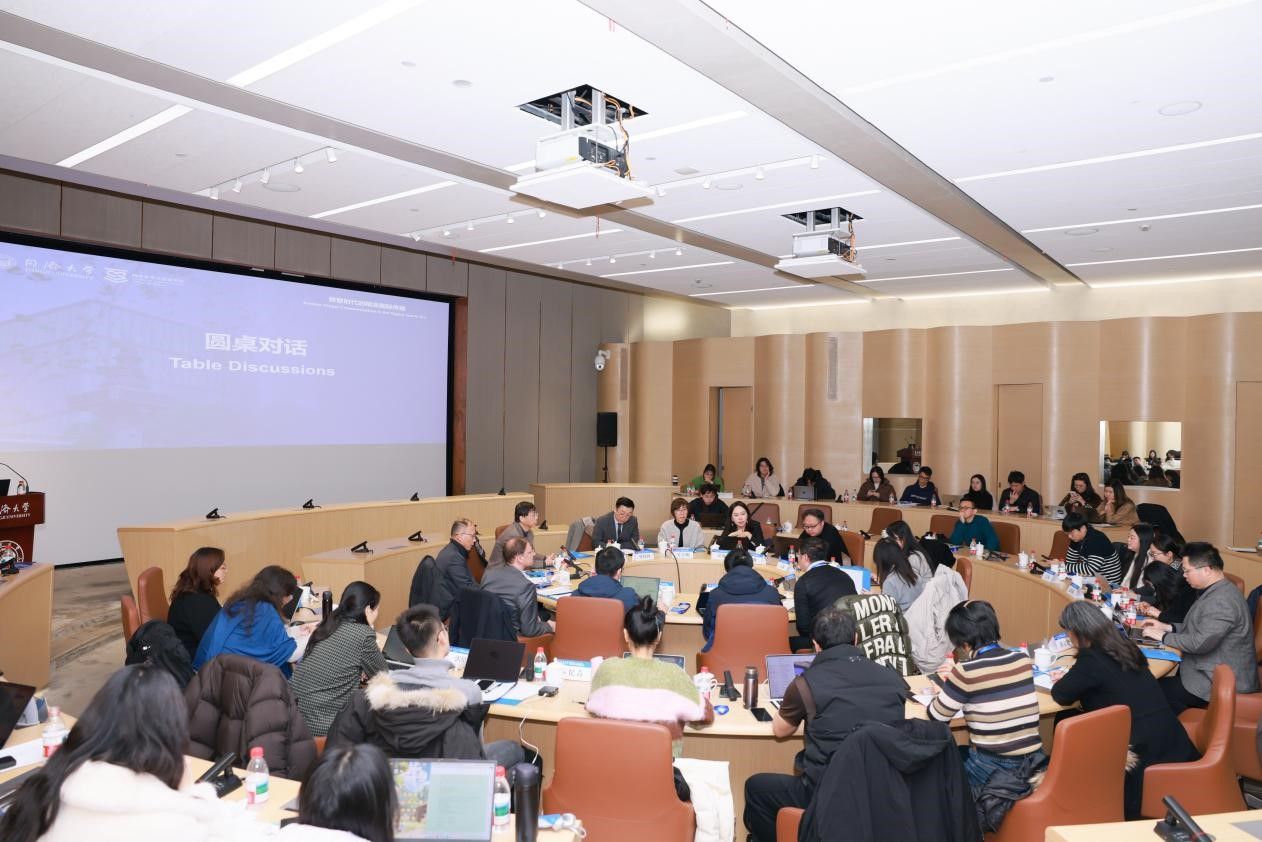
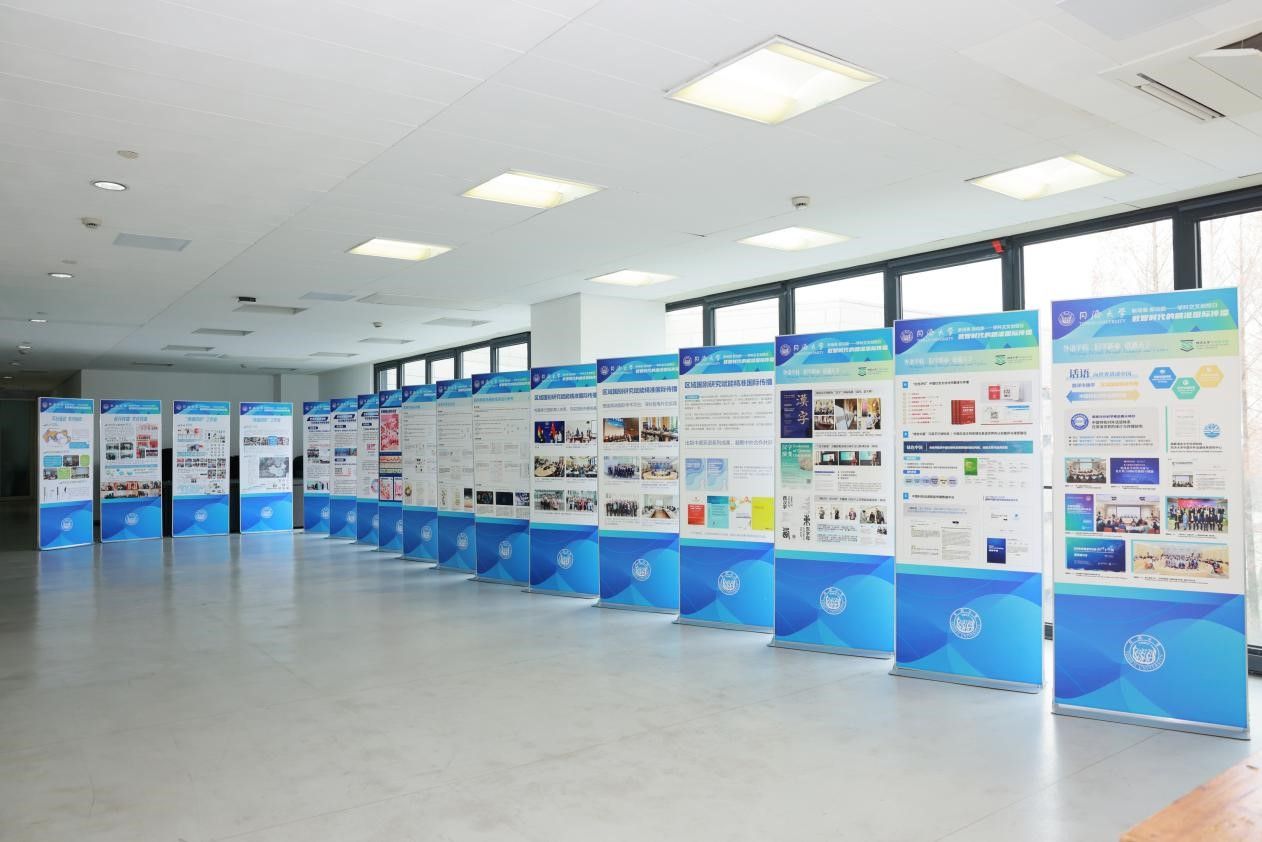
During the conference, a special exhibition titled “New Scenarios, New Drivers: Interdisciplinary Innovation Day: Precision International Communication in the Digital–Intelligent Era” was held concurrently. The exhibition combined case displays with technical illustrations to vividly showcase the innovative practices of Tongji University’s relevant schools in leveraging digital–intelligent technologies to empower international communication.
In her closing remarks, Prof. WU Yun, Dean of the School of Foreign Studies, highlighted that the forum, through keynote speeches, roundtable discussions, and exhibition visits, fostered in-depth dialogue across disciplines, offering a comprehensive view of international communication in the digital–intelligent era. She emphasized that future efforts will continue to leverage interdisciplinary strengths, translate academic expertise into systemic capabilities, deepen collaborative initiatives, and explore new theories, methods, and practices for precision international communication. The forum brought together insights from diverse fields, built a shared vision for development, and injected fresh momentum into the innovative growth of precision international communication, underscoring Tongji University's academic influence and commitment to advancing the field.